
Why Your Old SDSs Are Now Liability Magnets (2025 Update)
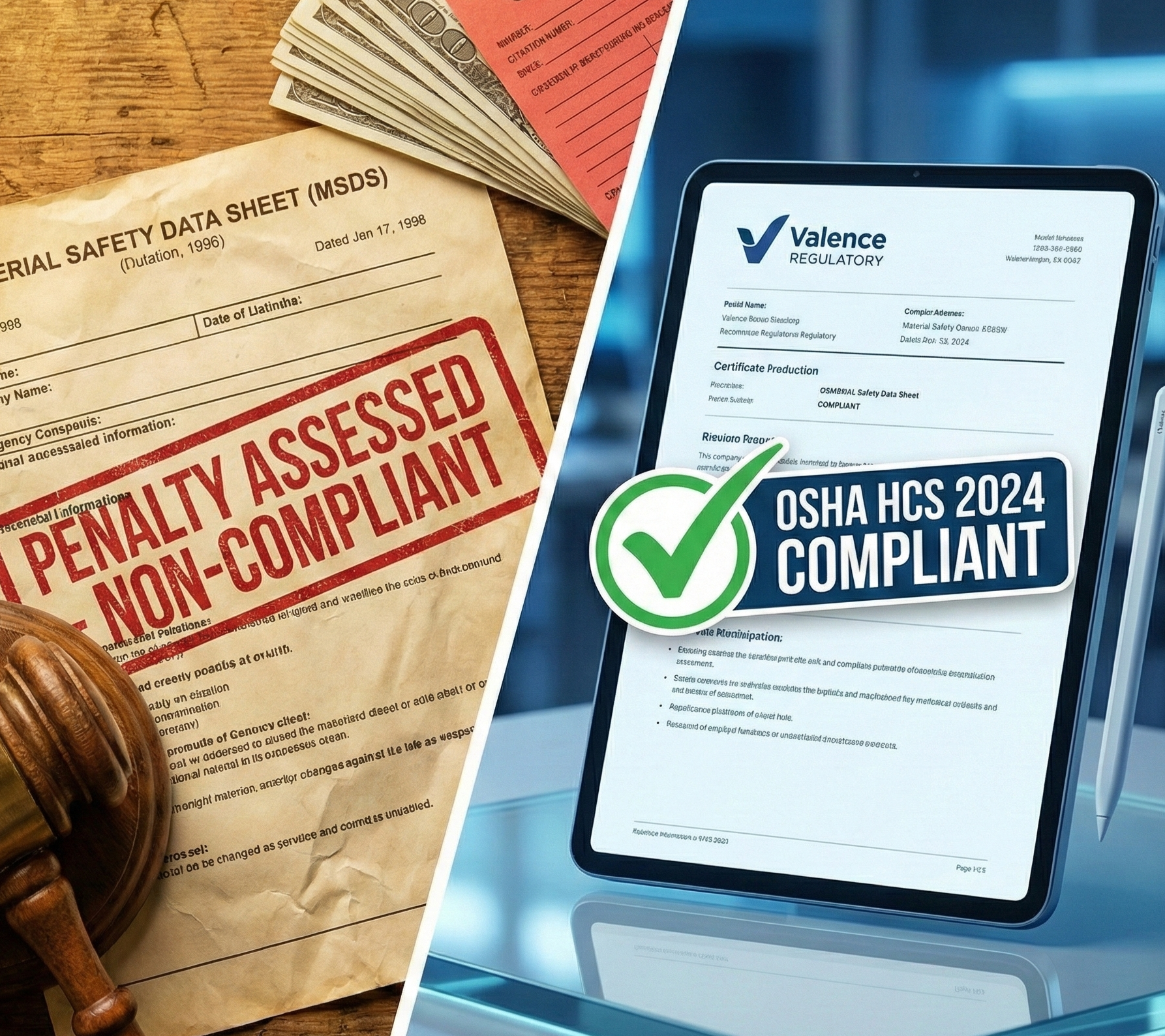
OSHA just raised the price of non-compliance. Here is why the "Hazard Communication" standard is the #2 most cited violation in America, and how to avoid paying the bill.
If you think your Safety Data Sheets (SDSs) are just administrative paperwork that no one reads, you need to check the new price tag attached to them.
As of January 15, 2025, OSHA has officially adjusted its civil penalties. The cost of ignoring your documentation just went up, and for "Repeat" offenders, it is now six figures.
Here is the regulatory reality for 2025 and why your SDS library needs an immediate audit.
1. The new price of a mistake (2025 inflation adjustment)
Effective January 15, 2025, the Department of Labor has increased maximum civil penalties to match inflation.
Serious Violation: Increased from $16,131 to $16,550 per violation.
Willful or Repeat Violation: Increased from $161,323 to $165,514 per violation.
The Risk: An inspector doesn't need to find a chemical spill to fine you. A missing SDS, an outdated binder, or a label without a signal word constitutes a "Serious" violation. If you have 10 outdated products, the math ($16,550 x 10) gets ugly very quickly.
2. Hazard Communication is still #2 most cited violation
You might think "Fall Protection" or "Machinery" are the only things OSHA cares about. You would be wrong.
According to the latest data, Hazard Communication (Standard 1910.1200) remains, after 2024 results, the #2 most cited violation in the country, with over 2,998 citations issued in the last fiscal year alone.
Why so high? Because it’s the easiest thing to check. An inspector can walk into your facility, ask to see your SDS binder, and if it’s missing or messy, they have you.
See the full 2024 Top 10 list here: OSHA Top 10 Cited Standards
3. Who Is getting hit? (It’s not just chemical plants)
Many business owners assume this only applies to heavy chemical manufacturers. The 2025 data proves otherwise. While Manufacturing is a huge target, Construction and Services are getting hammered with fines.
Top Industries Cited for HazCom Violations (2025):
Construction: 695 citations ($989k in penalties).
Manufacturing: Over 1,200 combined citations.
Accommodation & Food Services: 122 citations.
Wholesale Trade: 133 citations.
Even "safe" industries like hotels and warehouses are paying fines because they forget that cleaning supplies and maintenance chemicals require compliant SDSs.
Check your specific industry’s risk profile here: OSHA Industry Profile: Hazard Communication
4. The "SDS side of things": When do you need to update?
To stay off the "Repeat" list, you need to manage your library actively. A common question we get is: "Do SDSs expire?"
Technically, no—but they do become non-compliant the moment new data exists.
The 3-Month Rule: Manufacturers and importers must update their SDS within 3 months of becoming aware of "new and significant" hazard information (e.g., a new study shows an ingredient causes cancer).
The 6-Month Rule: Labels must be updated within 6 months of that new information.
The 30-Year Rule: Even if you stop using a chemical, OSHA requires you to keep the SDS as an "employee exposure record" for 30 years. Do not throw old binders in the trash; archive them.
Conclusion: Audit your library before OSHA does
With the fine for a single document now hitting $16,550, an SDS audit is the cheapest insurance policy you can buy.
Valence Regulatory specializes in reviewing SDS libraries for the "Top 3" deficiencies that trigger citations:
Missing documents.
Outdated GHS formats (pre-2015/2024 standards).
Mismatch between the Label and the SDS.
Contact us today to ensure your paperwork doesn't cost you more than your inventory.
The Valence Regulatory Technical Team Your partners in chemical safety.