
The OSHA Algorithm Updated. Is Your Facility on the 2025 Target List?
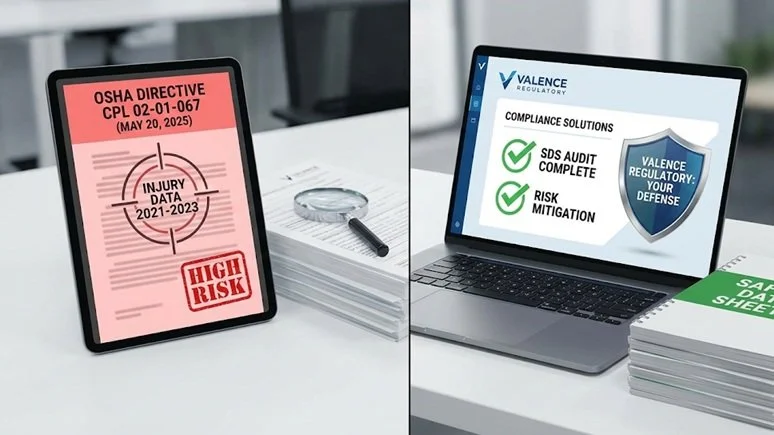
OSHA’s Directive CPL 02-01-067 is live as of May 20, 2025.
The targeting criteria have shifted to 2023 data, and if you get flagged, your SDS library is the first casualty.
On May 20, 2025, OSHA quietly released Directive CPL 02-01-067, effectively hitting “refresh" on its primary inspection targeting program.
While the concept of Site-Specific Targeting (SST) isn’t new, the data powering it is. This update cancels the previous 2023 directive and shifts the agency's focus to a new three-year window of injury records (2021–2023).
If you thought your facility was flying under the radar, it’s time to check again. Here is why your Safety Data Sheets (SDSs) are your first line of defense.
1. What changed?
The SST program uses your own data. Under the updated directive, OSHA will now select facilities for comprehensive inspections based on Form 300A data submitted for Calendar Years 2021, 2022, and 2023.
You are now in the crosshairs if:
High Rates (2023): Your DART rate (Days Away, Restricted, or Transferred) in 2023 exceeded the industry threshold.
Upward Trend (2021–2023): You might be below the industry average, but if your injury rates have crept upward for three years straight, you are a priority target.
Failure to submit an OSHA Form 300A in 2023: Did you fail to electronically submit your Form 300A in 2023? The new directive explicitly targets "non-responders" for random inspections to punish non-compliance.
2. The comprehensive inspection
The most dangerous part of CPL 02-01-067 is the scope. SST inspections are comprehensive.
An inspector might walk in because your "Slip, Trip, and Fall" rate is high, but they will audit your entire safety management system. And what is the easiest, most citable program to audit? Hazard Communication (1910.1200).
When a inspector asks, "Can I see the Safety Data Sheet for the solvent this employee uses to clean their station?", if you hand them an SDS from 2012, or if you can't find it, the inspection pivots. You are now facing citations for HazCom (the #2 most cited violation in the country) on top of your injury issues.
3. The connection with recordkeeping (standard interpretation)
It is critical to remember OSHA’s stance on recordkeeping, reinforced by recent interpretations (like the April 2024 update on enforcement procedures).
OSHA can issue citations for failure to submit records up to six months after the deadline. If you are targeted for an SST inspection because you didn't submit your data, the inspector arrives with a skepticism bias. They assume your paperwork is sloppy.
If your injury logs (Form 300) don't match your SDS inventory (for example, a worker had a "respiratory irritation" recorded, but you have no SDS for the respiratory hazard in that area) you are handing them a "willful" violation.
4. Action plan
The new directive is effective immediately. To protect your business:
Review your trend: Look at your 2021, 2022, and 2023 Form 300A logs. Is there an upward trend? If yes, expect a visit.
Match injuries to SDSs: For every chemical-related injury on your log, ensure the corresponding SDS is current and readily available.
Audit for "non-response": Confirm your 2023 data was actually submitted. If not, prepare your defense now.
Valence Regulatory helps companies align their chemical compliance with their injury records. Don't let a paperwork error turn a targeted inspection into a six-figure fine.
The Valence Regulatory Technical Team Your partners in chemical safety.